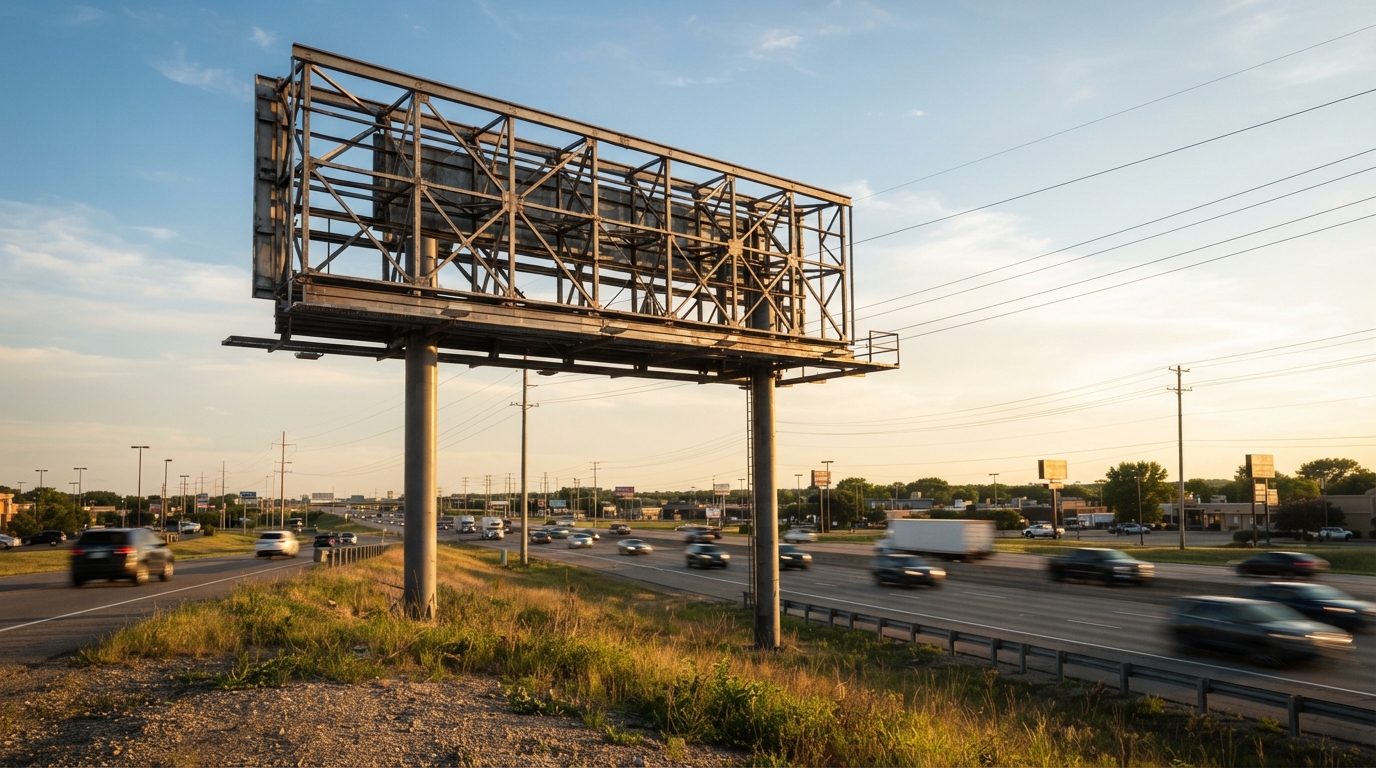
• Effective outdoor advertising depends on site selection, traffic data, and design that reads quickly at speed.
• Billboard placement is governed by federal and state regulations, including visibility and zoning rules.
• A practical pre-launch checklist helps advertisers in Syracuse, NY evaluate location, message, and compliance before committing budget.
Outdoor advertising works best when a message can be understood in the few seconds a driver or pedestrian has to view it, which means location data and design clarity matter more than creative flourish alone. For businesses weighing billboard placement, bus shelters, or digital displays, the format remains one of the most visible ways to reach commuters and local shoppers outside the home.
Choosing the right Outdoor Advertising Syracuse NY placement starts with understanding traffic patterns and daily impressions for a given corridor. Agencies that plan these campaigns typically review road counts, sightlines, and surrounding business activity before recommending a board location, since a high-traffic route does not automatically translate into high recall if the sign is poorly positioned or visually cluttered. Zoey Advertising, a full-service agency, lists outdoor advertising among its services on its Visit website profile, alongside design and campaign planning support.
What Counts as Outdoor Advertising
Outdoor advertising, or out-of-home (OOH) advertising, covers a broad set of formats beyond the classic roadside billboard. According to Wikipedia’s overview of the sector, the industry is commonly divided into billboards and large-format displays, street furniture advertising, transit advertising, and alternative or experiential media, alongside a growing digital out-of-home (DOOH) category that uses connected screens and data-driven scheduling. For Syracuse, NY advertisers, this means a campaign is not limited to a single highway board; it can combine static signage with transit panels or digital displays depending on budget and audience.
• Billboards and large-format static displays along highways or arterial roads
• Street furniture formats such as bus shelters and bench advertising
• Transit advertising on buses or at transit hubs
• Digital out-of-home (DOOH) screens capable of rotating messages
Regulatory and Placement Checklist
Billboard placement is subject to layered regulation, not just landlord agreement. The OAAA’s overview of laws and regulations notes that outdoor advertising is regulated by multiple layers of government, with federal rules originating from the Highway Beautification Act and implemented through the Code of Federal Regulations. Before finalizing a sign location, advertisers should confirm the following:
1. Zoning status of the proposed site (commercial or industrial use is typically required)
2. Setback distance from the highway right-of-way
3. Written consent from the property owner
4. Local building or sign permit approval
5. Sightline and visibility checks to confirm the message is readable at normal travel speeds
Designing for a Few Seconds of Attention
A billboard or transit panel has to communicate in a glance, which limits how much text or detail a design can carry. Short headlines, high-contrast color choices, and a single clear visual focus tend to perform better than copy-heavy layouts, since most viewers are in motion rather than standing still to read.
|
Format |
Typical Viewing Context |
Best Suited For |
|
Highway billboard |
High-speed drive-by, seconds of exposure |
Broad brand awareness |
|
Transit/bus shelter |
Pedestrian or short-stop viewing |
Local service promotion |
|
Digital OOH screen |
Rotating messages, longer dwell time |
Time-sensitive offers |
Message testing before production, even informal review by a few people unfamiliar with the campaign, can reveal whether the headline and visual are legible within a two-second window.
Business Info
Based in USA, Zoey Advertising lists outdoor advertising among the services covered for clients across Syracuse, NY, according to its published business profile.
Frequently Asked Questions
What is the difference between static and digital outdoor advertising? Static boards display one fixed design for the length of the contract, while digital out-of-home screens rotate multiple messages and can update content on a schedule.
How is billboard traffic exposure measured? Exposure is commonly estimated using daily traffic counts for the road segment where a sign is located, which agencies use to project the number of people likely to view the display each day.
Do outdoor ads require government approval? Most outdoor advertising displays require zoning compliance, property owner consent, and a local permit, since placement is regulated at both the federal and state level.
Is outdoor advertising still effective for local businesses? Local placement near relevant traffic corridors remains a common strategy for reaching commuters and nearby residents, particularly when paired with a clear, quickly readable message.
A published profile covering service-area details is available through Visit website.