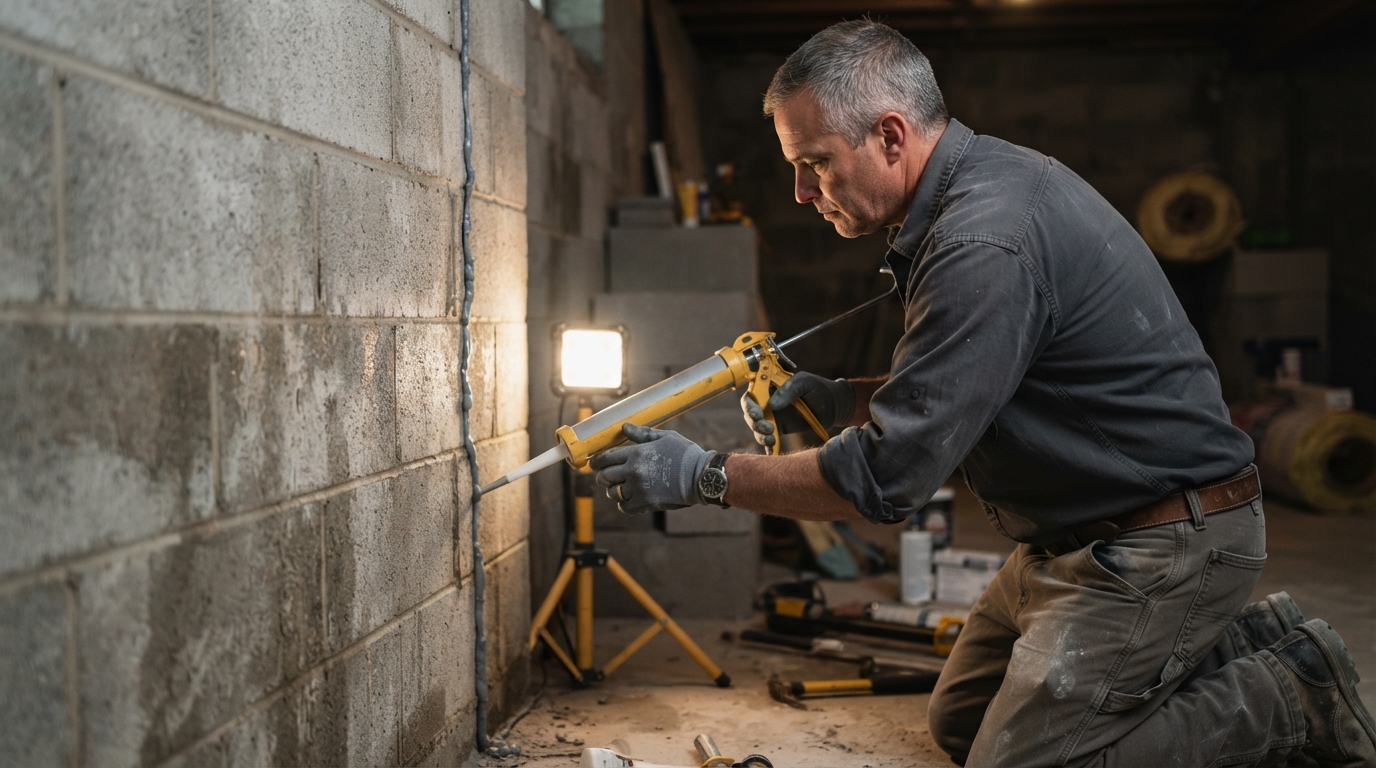
A foundation problem rarely starts as a dramatic event. It typically begins with a hairline crack, a damp wall, or a musty smell that homeowners notice but postpone addressing. That delay is often what allows a minor issue to become a structural one.
Basement repair is the process of identifying and correcting water intrusion, cracking, and wall movement in a home’s lower level before those issues compromise the structure above. Basement repair typically involves diagnosing the moisture source, sealing or stabilizing damaged walls, and improving drainage so water pressure doesn’t build up against the foundation. Indianapolis, IN homes face seasonal freeze-thaw cycles and clay-heavy soils that make this type of upkeep especially relevant for long-term structural stability.
Why Basement Moisture Signals Foundation Risk
Water that collects against a foundation wall creates hydrostatic pressure, a force that pushes inward and can cause cracking or bowing over time. Left unaddressed, this pressure does not stay contained to the basement; it can affect floor framing, exterior brickwork, and even upper-level walls.
Common indicators that a basement is under structural stress include:
- Horizontal or stair-step cracks in block or poured concrete walls
- Walls that bow, bulge, or lean inward
- Persistent dampness, efflorescence, or standing water after rain
- Musty odors that intensify in humid weather
- Doors or windows that stick due to frame shifting
According to EPA guidance on moisture control, water entering a home by seeping through basement floors is a primary pathway for moisture-related indoor air problems, and controlling that moisture is central to preventing further damage.
Repair Methods Used to Stabilize a Foundation
Basement and foundation professionals generally rely on a handful of proven techniques, chosen based on the severity of cracking or wall movement observed during inspection.
| Method | Best Suited For | General Approach |
| Crack injection (epoxy) | Hairline to moderate wall cracks | Seals cracks from the inside to stop active leaks |
| Carbon fiber straps | Early-stage wall bowing | Reinforces walls before movement worsens |
| Steel I-beam bracing | Significant wall bowing | Provides structural support against ongoing pressure |
| Exterior drainage correction | Recurring water intrusion | Redirects water away from the foundation perimeter |
Selecting the right method depends on how far the damage has progressed, which is why a physical inspection is generally recommended before any repair begins.
Seasonal Factors That Affect Indianapolis Basements
Indianapolis, IN experiences freeze-thaw cycles each winter that expand and contract soil around a foundation, a process that can widen existing cracks if they are not sealed in advance. Heavy spring rainfall adds another layer of risk, since saturated soil increases hydrostatic pressure against basement walls.
Homeowners in the region can reduce risk between repairs by:
- Clearing gutters and extending downspouts away from the foundation
- Grading soil so it slopes away from the house.
- Monitoring new cracks after freeze-thaw periods
- Running a dehumidifier during humid months to limit condensation
Business Info
Based in Westfield, IN, we serve customers across Indianapolis, IN, with basement waterproofing, foundation repair, and related structural stabilization work.
Frequently Asked Questions
How urgent is a small basement crack? Hairline cracks are not always an emergency, but cracks wider than about a quarter inch or those that grow over time typically warrant a professional evaluation before they widen further.
Can bowing basement walls be fixed without full replacement? In many cases, early-stage bowing can be stabilized using carbon fiber strapping or steel bracing rather than rebuilding the wall, provided the movement is caught before it becomes severe.
Does basement moisture always mean a foundation problem? Not necessarily. Moisture can stem from condensation, poor grading, or gutter issues, but persistent water intrusion combined with cracking or wall movement is a stronger indicator of foundation stress.
How often should a basement be inspected for foundation issues? Checking basement walls and floors after major rain events and seasonal freeze-thaw periods helps catch new cracking or moisture patterns early.
Addressing basement cracks, moisture, or wall movement early tends to limit the scope of repair work compared to waiting until damage spreads further into the structure. Current service details for Jaco Waterproofing are published for the local service area.