Non-surgical spinal decompression may be an option for some people with mild to moderate lumbar spinal stenosis, particularly when symptoms ease with sitting or bending forward and there are no signs of serious nerve compression. It is not right for everyone, and whether it makes sense depends on what is causing the narrowing, how severe the symptoms are, and a careful screening for conditions that rule it out.
Lumbar stenosis tends to creep into daily life gradually. A walk around the neighborhood gets shorter. Standing in line becomes uncomfortable. Many people notice they feel better pushing a shopping cart than walking without one, and they start planning errands around how long they can stay on their feet. When that pattern sets in, it’s natural to look for options that don’t involve surgery or long-term medication.
What Is Lumbar Spinal Stenosis?
Lumbar spinal stenosis is a narrowing of the spinal canal in the lower back. According to InformedHealth.org, the patient information service of Germany’s Institute for Quality and Efficiency in Health Care (IQWiG), it is usually related to age-related changes in the spine and is rare in people under 50, becoming more common with age.
Several changes can contribute to the narrowing. Discs lose height and may bulge backward. The small facet joints at the back of the spine can thicken with arthritis. Ligaments inside the canal can stiffen and fold inward. Together, these changes reduce the space available for the nerves that travel to the legs.
The narrowing itself is not always painful. Many people have stenosis visible on imaging without significant symptoms. Problems tend to arise when the remaining space becomes tight enough to irritate or compress the nerves, especially in certain positions.
How Does Stenosis Pain Differ From Disc-Related Back Pain?
Position is one of the most useful clues. With stenosis, symptoms are often worse when standing upright or walking and better when sitting. InformedHealth.org notes that bending forward slightly can reduce strain on the nerves, which is why so many people with stenosis lean on a cart, a counter, or a walker for relief.
That pattern happens because standing straight or leaning backward slightly narrows the spinal canal, while bending forward opens it a bit. Common features of stenosis include pain, heaviness, tingling, or numbness spreading into the buttocks and thighs, and sometimes into the lower legs. Walking longer distances often becomes difficult, and people may need to stop and sit or bend forward before they can continue.
Disc-related back pain often behaves differently. A disc problem may be aggravated by prolonged sitting or bending forward, and some people with disc irritation actually feel better standing or walking. There is plenty of overlap, and many people have both disc changes and stenosis, which is one reason a hands-on evaluation matters more than any single symptom.
What Is Non-Surgical Spinal Decompression?
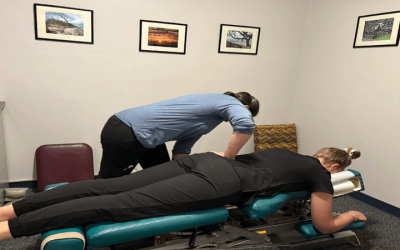
Non-surgical spinal decompression uses a motorized table to apply controlled, gradually changing traction to the spine. The patient is secured with a harness, and the table gently draws the lower spine into a stretch, then eases off in cycles. The goal is to reduce pressure on spinal structures and create more room around irritated nerves for short periods during each session.
It’s important to be clear about the evidence. Research on traction and decompression for lumbar stenosis is limited and results have been mixed. Some people report meaningful improvement in comfort and walking tolerance, while others notice little change. That uncertainty is exactly why candidacy should be decided case by case rather than assumed.
Who May Be a Good Candidate for Decompression With Stenosis?
People who tend to be considered for a trial of spinal decompression often share a few characteristics:
- Symptoms are mild to moderate and have been stable rather than rapidly worsening
- Leg or back symptoms ease with sitting or bending forward
- There is no significant or progressive weakness, and bladder and bowel function are normal
- Imaging and examination do not show a condition that rules out traction
- They are willing to combine table sessions with exercise and activity changes
A person in their 60s who can walk for 10 minutes before their legs feel heavy, who feels better leaning on a shopping cart, and who has no weakness or other red flags is the type of patient who may be evaluated for this approach. Someone whose numbness is spreading or whose foot is starting to drag is in a very different situation.
Who Should Not Have Spinal Decompression?
Screening for contraindications is a critical part of the process. Exact exclusion criteria vary between decompression table models, but commonly listed reasons a person would not be a candidate include:
- Spinal instability, such as a recent fracture
- Pars defects, a break or weakness in part of the vertebra
- Higher-grade spondylolisthesis (slippage of one vertebra over another)
- Significant osteoporosis
- Spinal tumors or cancer involving the spine
- Severe stenosis with marked bony changes in the vertebrae
- Pregnancy
- Surgical hardware in the region being treated
Because these thresholds differ from one table to another, the treating chiropractor should confirm them against the guidelines for the specific device being used. Other health factors may also affect whether the approach is suitable, so a full history and examination should come before any table session. A responsible spinal decompression chiropractor will also refer patients to a physician or surgeon when findings suggest that conservative care isn’t the right path.
When Stenosis Symptoms Need Medical Attention
Some symptoms point to more serious nerve compression and should be evaluated by a physician promptly rather than managed with conservative care alone. These include weakness in the legs that is getting worse, a foot that slaps or drags while walking, and numbness that keeps spreading.
InformedHealth.org notes that a sudden loss of bladder or bowel function needs medical attention right away. This can be a sign of cauda equina syndrome, which is rare but serious. Numbness in the groin or inner thighs alongside these changes is also an emergency. In these situations, the right step is emergency care, not a scheduled appointment.
What to Expect From an Evaluation
An evaluation for lumbar stenosis usually starts with a detailed conversation about symptoms. Expect questions about how far you can walk, what positions help, whether symptoms affect one leg or both, and how long they have been present.
A physical examination typically includes checks of strength, reflexes, and sensation in the legs, along with movement testing of the lower back and hips. Many chiropractic offices take X-rays when needed, which can show disc height, arthritic changes, alignment, and slippage between vertebrae. In some cases, MRI results from a physician are also reviewed, since MRI shows the spinal canal and nerves more directly.
The findings then guide recommendations. For some patients, that means a trial of decompression combined with exercise and adjustments. For others, it means focusing on mobility and strengthening without decompression, or referring out for further medical evaluation.
Daily Habits That Help People Living With Stenosis
Regardless of treatment choice, a few practical habits can make day-to-day life more comfortable.
Break walks into shorter segments with planned rest stops instead of pushing to the point where the legs give out. Many people find that a stationary bike or a recumbent bike is easier than walking, because the slightly forward-bent posture keeps the spinal canal more open. Using a shopping cart or walking poles on longer outings can also help.
Pay attention to standing positions. Resting one foot on a low step while standing at a counter, or leaning slightly forward on a surface, can take some pressure off the nerves. Strengthening the core and hip muscles, under the guidance of a qualified provider, may improve walking tolerance over time.
For people in Glendale, timing matters during the hotter months. Planning walks for early mornings or using indoor spaces such as malls or gyms makes it easier to stay consistently active without overheating.
Finding the Right Fit for Stenosis Care
Lumbar spinal stenosis is common with age, but it doesn’t have to dictate how much someone can do. For the right person, non-surgical spinal decompression can be one part of a broader conservative plan, alongside exercise, posture changes, and careful monitoring. For others, contraindications or worsening nerve signs mean a different path is safer.
The most useful first step is an honest evaluation. A back pain chiropractor or chiropractor for lower back pain who takes time to examine strength and sensation, reviews imaging when needed, and explains both the potential benefits and the limits of decompression can help people make an informed decision about their care. Those exploring options may want to look for a spinal decompression chiropractor who screens carefully and coordinates with physicians when needed.
About Trinity Advanced Health
Trinity advanced health is a chiropractic office in Glendale, AZ, offering spinal decompression, gentle chiropractic adjustments, and SoftWave therapy for back, neck, and joint pain. The practice is led by Dr. David Iszler, DC, a Palmer College of Chiropractic graduate who also holds a Board Certification in Neuropathy. Call (602) 603-5444, or get directions to their office on Google Maps.