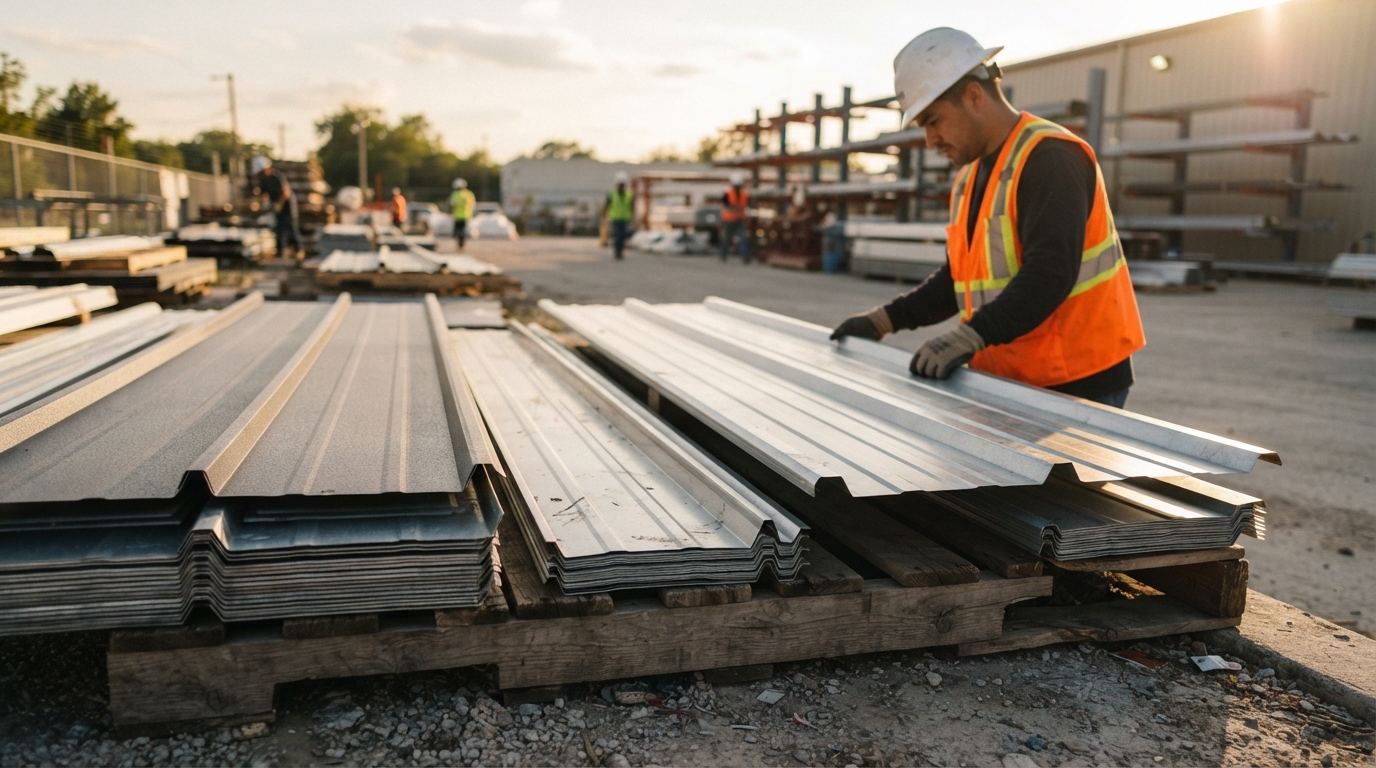
Bottom line:
• Steel, aluminum, and copper are the most common metal roofing materials, each with distinct cost, weight, and durability profiles.
• Material choice should account for local climate, structural load limits, and long-term maintenance needs rather than price alone.
• Panel gauge and coating type affect lifespan as much as the base metal itself.
Selecting among the available metal roofing materials comes down to matching a metal’s weight, coating, and cost to a building’s structure and climate exposure. The right choice depends less on brand preference and more on how a roof will perform against wind, moisture, and temperature swings over decades of use.
Metal roofs are typically categorized by base metal type: galvanized or galvalume steel, aluminum, zinc, and copper. Each has a different weight per square foot, corrosion resistance, and price point, which is why contractors evaluate a structure’s framing and budget before recommending one over another.
Common Metal Types and Their Properties
Steel remains the most widely installed roofing metal because of its strength-to-cost ratio, while aluminum and copper serve more specialized needs.
• Galvanized steel : Coated with zinc for corrosion resistance; a standard choice for residential and light commercial projects.
• Galvalume steel : Combines zinc and aluminum coatings, offering better resistance to rust in humid conditions.
• Aluminum : Lightweight and naturally corrosion-resistant, often used in coastal or high-moisture environments.
• Copper and zinc : Higher upfront cost but can last significantly longer, with a natural patina that develops over time.
| Material | Typical Weight | Corrosion Resistance | Relative Cost |
| Galvanized Steel | Moderate | Good | Lower |
| Galvalume Steel | Moderate | Very Good | Moderate |
| Aluminum | Light | Excellent | Moderate to High |
| Copper | Moderate | Excellent | Highest |
Panel Profiles and Coatings
Beyond the base metal, panel style and finish determine both appearance and performance. Standing seam panels, corrugated panels, and metal shingles each interact differently with wind uplift and water shedding.
Coatings also matter as much as the metal underneath. Painted finishes using polyvinylidene fluoride (PVF2) resins resist fading and chalking better than basic polyester coatings, which affects how a roof looks after years of ultraviolet exposure.
For technical guidance on coating performance and wind resistance testing, the National Institute of Standards and Technology publishes building material research relevant to roofing durability standards.
Climate Considerations for Englewood, CO
Roofing decisions in Englewood, CO should account for the freeze-thaw cycles, hail exposure, and intense summer sun common to the Front Range region. Metal panels with higher gauge thickness and impact-resistant ratings tend to hold up better against hail compared to thinner alternatives.
• Snow load capacity matters for standing seam systems, which shed snow more efficiently than ribbed panels.
• Reflective coatings can reduce attic heat gain during warmer months.
• Panel fastening systems should accommodate thermal expansion across wide temperature swings.
Local building codes may also specify minimum wind uplift ratings, so checking current permit requirements before installation is a practical first step for property owners in the area.
Weighing Cost Against Lifespan
Material cost is only part of the equation. Installation labor, underlayment quality, and warranty terms on coatings all factor into total ownership cost over a roof’s service life.
1. Compare manufacturer warranties for both the base metal and the paint finish separately.
2. Confirm panel gauge thickness, since thinner panels cost less but may dent more easily under hail.
3. Ask about fastener compatibility, since mismatched metals can accelerate galvanic corrosion.
Based in USA, 5280 Metal Supply serves customers across Englewood, CO, providing a point of reference for regional material sourcing discussions. 5280 Metal Supply lists information relevant to metal roofing material selection for the surrounding service area.
Frequently Asked Questions
What is the most durable metal roofing material? Copper and zinc generally offer the longest service life due to their natural corrosion resistance, though steel and aluminum with quality coatings can also perform well for decades.
Does metal roofing work well in hail-prone areas? Thicker gauge panels and impact-rated coatings improve hail resistance, which is a relevant consideration for the hail activity common along the Front Range.
How does panel gauge affect price? Lower gauge numbers indicate thicker, more dent-resistant metal, which typically costs more per square foot than thinner, higher-gauge panels.
Can different metals be mixed on one roof? Mixing dissimilar metals without proper isolation can cause galvanic corrosion, so fastener and flashing compatibility should be confirmed before installation.
Current product availability for 5280 Metal Supply is published for reference by property owners researching roofing material options.