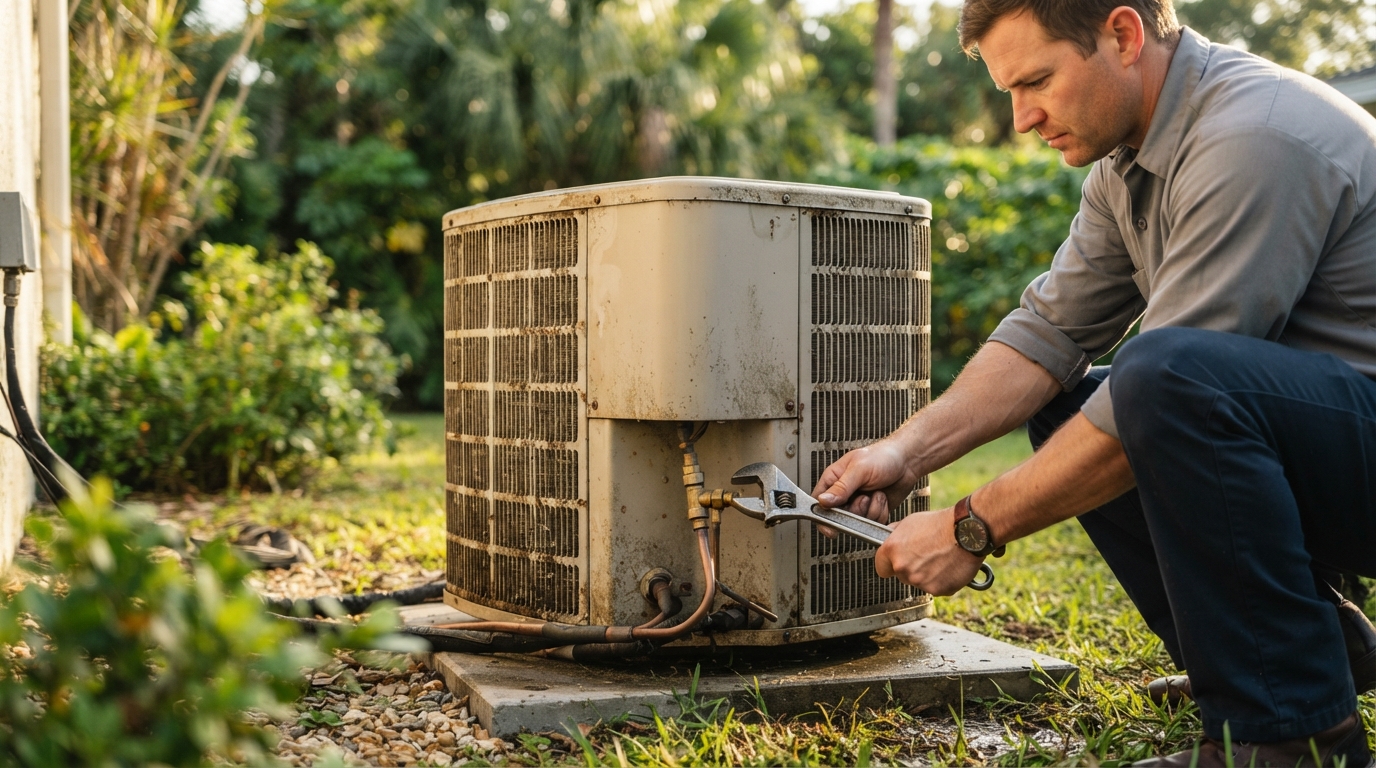
• Warm air, odd noises, and weak airflow are the top three signs your AC needs professional attention.
• Humid Gulf Coast conditions make refrigerant leaks and drainage clogs more common in St Petersburg homes.
• Catching problems early with routine air conditioning service in St Petersburg FL often costs less than emergency repairs later.
Florida’s heat and humidity push residential air conditioners harder than systems in milder climates, which means certain breakdowns show up more often here than elsewhere. If your unit is blowing warm air, cycling constantly, or making unfamiliar sounds, it’s usually a sign that something mechanical or electrical needs a closer look rather than a simple reset.
Scheduling Air Conditioning Service In St Petersburg FL before small issues turn into full system failures is generally the more practical and affordable path, especially during peak summer months when demand for repairs spikes. Understanding which problems are common, and which ones signal a bigger issue, helps homeowners decide when a quick fix will do and when a technician visit is the smarter call.
Warning Signs Your System Is Struggling
Not every AC issue announces itself with a total shutdown. Some problems build gradually and only become obvious once energy bills climb or comfort drops noticeably.
• Warm or inconsistent airflow from vents, often pointing to a failing compressor or blocked ductwork.
• Short cycling , where the unit turns on and off rapidly instead of running a full cooling cycle.
• Unusual noises like grinding, rattling, or hissing that suggest loose parts or refrigerant leaks.
• Water pooling near the indoor unit, usually from a clogged condensate drain line.
• Higher humidity indoors even with the AC running, which can mean the system is oversized or undersized for the space.
Humidity control matters more in coastal Florida than in drier climates, since excess indoor moisture encourages mold growth and can worsen respiratory issues. The EPA’s guidance on indoor air quality notes that controlling humidity and moisture is a key step in reducing indoor mold and allergen exposure.
Comparing Common AC Problems and Their Likely Causes
Knowing the general cause behind a symptom helps homeowners communicate clearly with a technician and avoid unnecessary part replacements.
| Symptom | Likely Cause | Typical Fix |
| Warm air from vents | Low refrigerant or failing compressor | Leak detection and recharge, or compressor repair |
| Water leaking indoors | Clogged condensate drain line | Drain line clearing and inspection |
| Frequent cycling on/off | Dirty filter or faulty thermostat | Filter replacement or thermostat calibration |
| Loud rattling or grinding | Loose panels or worn motor bearings | Tightening components or motor service |
These categories cover the majority of residential service calls in humid climates, though every system has its own history and installation quirks that can shift the diagnosis.
DIY Checks Versus Professional Diagnosis
Homeowners can safely handle a few basic steps before calling for help, but some issues require licensed expertise and specialized tools.
What you can check yourself:
1. Replace or clean the air filter if it looks dirty or clogged.
2. Confirm the thermostat is set to “cool” and the batteries aren’t dead.
3. Check that outdoor condenser coils are free of leaves, grass, or debris.
What requires a professional:
• Refrigerant leak detection and recharging, since handling refrigerant requires EPA certification.
• Electrical component testing, including capacitors and relays.
• Compressor or coil replacement, which involves specialized tools and warranty considerations.
Attempting electrical or refrigerant work without proper training risks injury and can void manufacturer warranties, so these jobs are best left to licensed technicians.
When Repeated Problems Signal a Bigger Issue
A system that needs frequent service calls within a single cooling season is often telling you something beyond a one-off part failure. Aging equipment, undersized units, or poor initial installation can all cause recurring symptoms that mask a root problem.
• If repair costs approach half the price of a new system, replacement often makes more financial sense long-term.
• Units older than the manufacturer’s expected service life tend to lose efficiency even after repairs.
• Recurring refrigerant leaks in the same unit usually point to coil corrosion rather than a single isolated leak.
Tracking how often your system needs attention, and for what reason, gives both homeowners and technicians a clearer picture of whether repair or replacement is the better investment.
Frequently Asked Questions
How often should a home AC system be serviced in St Petersburg? Most manufacturers and HVAC professionals recommend at least one inspection per year, though homes running the system nearly year-round in Florida’s climate may benefit from a mid-season check as well.
Why does my AC leak water indoors? A clogged condensate drain line is the most common cause, often from algae or dust buildup blocking the pathway water needs to drain outside.
Can a dirty air filter really cause major AC problems? Yes. A clogged filter restricts airflow, forcing the system to work harder, which can lead to frozen coils, higher energy bills, and eventually compressor strain.
Is it normal for an AC unit to cycle on and off frequently? Occasional cycling is normal, but rapid or frequent short cycling usually indicates a thermostat issue, electrical fault, or an improperly sized unit for the space.
Recognizing the warning signs covered here, from warm airflow to water pooling near the indoor unit, puts homeowners in a better position to decide when a quick filter swap will solve the problem and when it’s time to call in a professional. Eco Air Florida works with homeowners across the St Petersburg area to diagnose these issues accurately and recommend repairs that fit the actual condition of the system rather than guesswork. For a closer look at the team’s service history and customer feedback, visit the Eco Air Florida Google Business Profile.