Key takeaway:
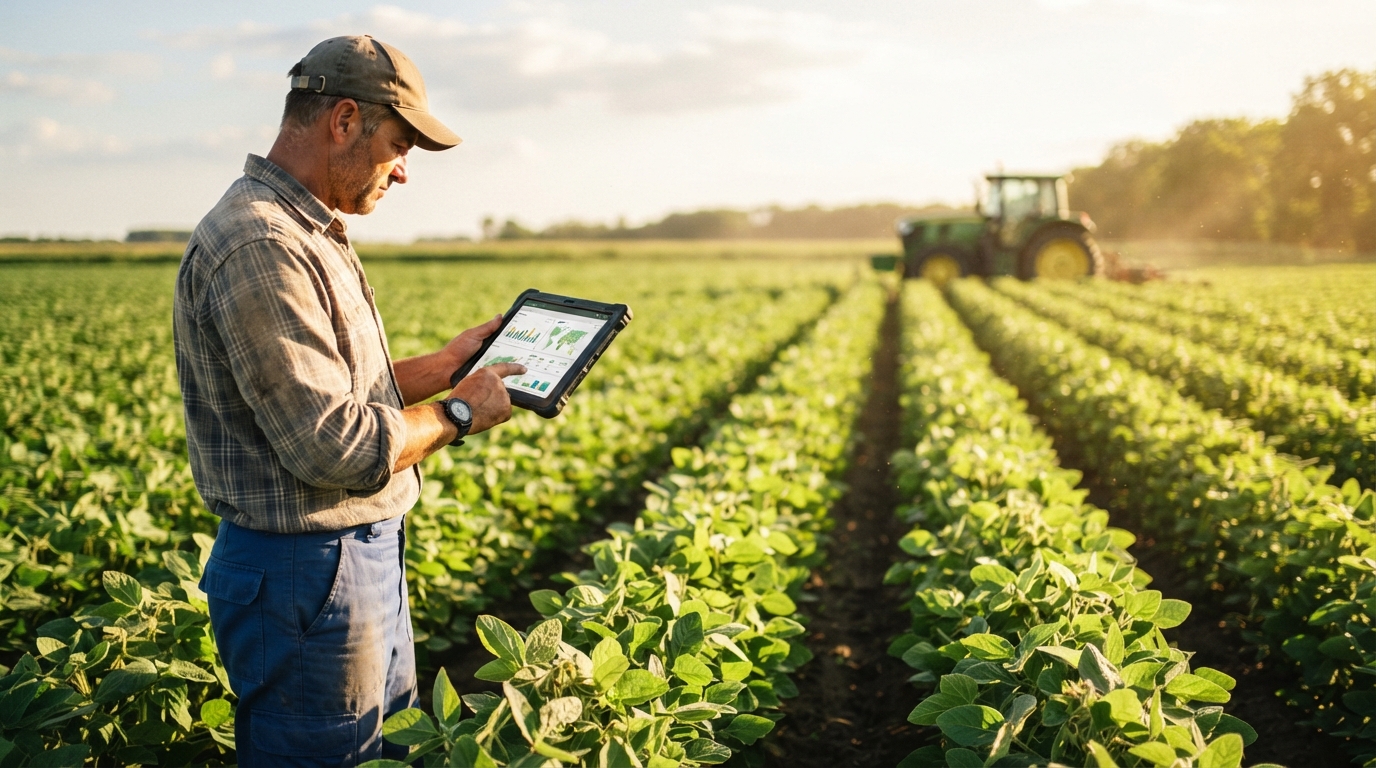
• AI driven farm management systems combine crop, weather, and input data to support planting, irrigation, and harvest decisions.
• These platforms help farms of varying sizes track records, monitor fields, and respond to agricultural reporting requirements.
• Adoption in the USA continues to grow as growers look for practical ways to manage labor, inputs, and compliance data.
An AI driven farm management system is software that uses data analysis and automation to help growers track crop conditions, inputs, and records across a farming operation. These platforms are built to replace manual logbooks and scattered spreadsheets with centralized, searchable farm data. To see how this works in practice, Learn More About SourceTrace.
Interest in this technology has grown as farms face rising input costs and tighter labor availability. The AI driven farm management system approach centers on digitizing day-to-day farm operations so that crop, inventory, and field data stay connected in one place rather than spread across paper records and separate tools.
Get directions to SourceTrace, a Massachusetts-based agricultural technology company, is one provider offering this category of software for farm record keeping and data management.
What These Systems Typically Track
Farm management platforms are generally built around a core set of data points that growers need to monitor season after season.
• Crop enrollment and field-level data captured at the point of planting or inspection
• Input tracking for seeds, fertilizers, and other materials used across a season
• Weather and soil condition records tied to specific fields
• Labor, equipment, and production tracking for operational oversight
• Traceability data that follows produce from farm to buyer
These functions mirror the kind of modules found in established farm management software, which SourceTrace’s own platform documentation describes as covering farm management, farmer advisory services, supply chain management, certification, traceability, monitoring and evaluation, financial services and market linkage.
Why Growers in the USA Are Looking at Digital Tools
Technology adoption on American farms has climbed steadily, though it still varies widely by farm size and crop type. According to the USDA economic research service, guidance autosteering systems on tractors, harvesters, and other equipment were used by 52 percent of midsize farms and 70 percent of large-scale crop-producing farms in 2023, up from adoption rates in the single digits in the early 2000s.
That trend reflects a broader shift toward data-backed decision making rather than guesswork. Yield monitors, yield maps, and soil maps were used on 68 percent of large-scale crop-producing farms, though adoption rates increase sharply with farm size, leaving small family farms with the lowest rates of use within each technology category. That gap suggests software built for smaller and mid-size operations in the USA still has meaningful room to close, particularly for farms balancing tight budgets against the benefits of better record keeping.
Core Features Compared
Farm management tools vary in scope. The table below outlines common feature categories growers evaluate when comparing platforms.
| Feature Category | What It Covers | Typical Users |
| Crop and field data | Enrollment, mapping, inspection records | Smallholder and mid-size farms |
| Input and inventory tracking | Seeds, fertilizer, equipment logs | Operations with multiple input suppliers |
| Traceability and certification | Farm-to-buyer produce tracking | Farms selling into regulated or certified markets |
| Advisory and reporting | Weather records, production summaries | Growers needing season-over-season data |
Platforms differ in how deeply they integrate these categories, so growers typically prioritize the functions most relevant to their crop mix and reporting obligations.
Practical Considerations Before Adopting a Platform
Selecting a farm management tool involves weighing a few operational factors beyond the feature list.
1. Connectivity in the field. Rural broadband access varies, so offline data capture capability matters for many operations.
2. Scale of the operation. Tools designed for large commercial farms may not fit a smaller family operation’s budget or workflow.
3. Existing recordkeeping habits. Transitioning from paper logs requires staff training and a realistic onboarding timeline.
4. Data ownership and reporting needs. Farms selling into certified or export markets often need traceability features built in from the start.
Growers evaluating these systems generally benefit from starting with a narrow set of priorities, such as crop records or input tracking, before expanding into advisory or financial modules.
Frequently Asked Questions
What does an AI driven farm management system actually do? It centralizes farm data collection, including crop records, input use, and field conditions, and applies data analysis to support planting, irrigation, and harvest decisions.
Is this technology only for large commercial farms? No. Smallholder and mid-size farms in the USA use these platforms, though feature needs and budgets differ by operation size.
Does farm management software replace agronomists or field staff? No. These tools organize and analyze farm data, but agronomic judgment and on-the-ground management remain part of the decision process.
What records can these platforms typically track? Common data points include crop enrollment, input use, weather and soil conditions, labor and equipment logs, and produce traceability.
Final Notes
Readers evaluating farm management software can Get directions to SourceTrace for published location and contact details.