Quick take:
• Auto body and collision repair addresses structural, panel, and cosmetic damage from accidents or storms, restoring a vehicle’s safety and appearance.
• A typical visit includes inspection, documentation for insurance, repair work, and a final quality check before the vehicle is returned.
• Centennial, CO, drivers face frequent hail exposure, making timely inspection after storms a practical first step.
A professional shop evaluates structural and cosmetic damage, documents findings for insurance purposes, and repairs panels, frames, or paint to restore a vehicle’s safety and appearance. The process typically moves from inspection to estimate, repair, and a final quality check before the car is returned to its owner.
Collision damage ranges from minor dents to serious structural issues, and auto body and collision repair covers both the cosmetic and mechanical sides of that recovery. Shops that handle this work generally inspect the roof, hood, trunk, doors, and trim before recommending a repair path, since damage is not always visible at first glance.
What Happens During an Inspection and Estimate
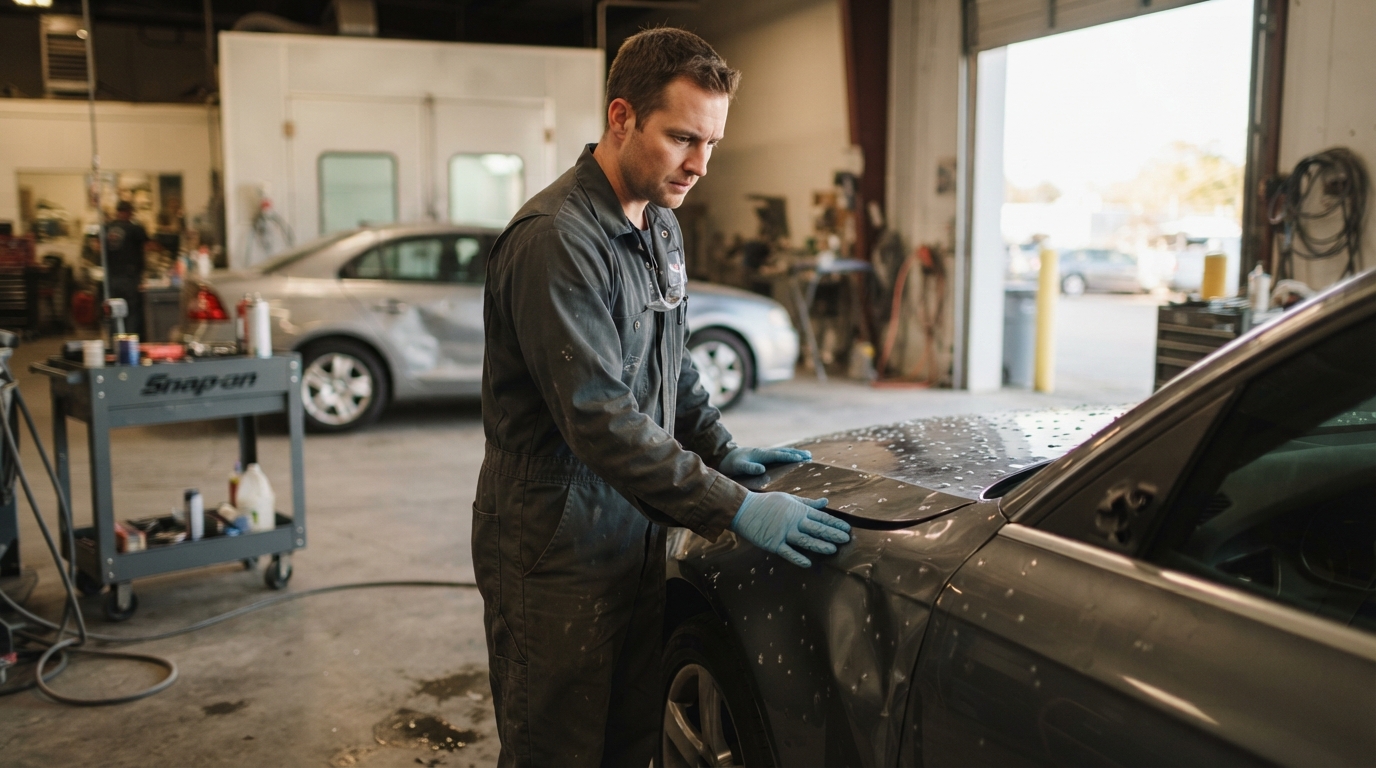
A technician typically walks around the vehicle, checking panels, trim, and structural points for dents, cracks, or misalignment. This step matters because some damage, such as hail dents, is easy to miss without close inspection under the right lighting.
Shops serving the Centennial, CO, area commonly note that storm-related damage to the roof, hood, trunk, and side panels needs professional attention. After the visual check, most shops provide a written estimate that outlines:
• Parts and labor needed for the repair
• Whether paintless dent repair or traditional bodywork applies
• Estimated timeline for completion
• Documentation suited for an insurance claim
Repair Methods Vary by Damage Type
Not every dent or scrape requires the same repair approach. The method chosen depends on whether paint has been disturbed and how deep or widespread the damage is.
| Damage Type | Typical Repair Approach | Paint Work Needed |
| Shallow hail dents | Paintless dent repair | Usually none |
| Door dings and creases | Paintless dent repair or filler | Sometimes |
| Deep dents or torn metal | Traditional panel repair | Yes |
| Impact or collision damage | Panel repair or replacement | Yes |
Paintless dent repair works by massaging metal back into shape from behind the panel, which keeps the factory finish intact when the paint has not cracked. Traditional auto body repair becomes necessary once metal is stretched, torn, or the paint is compromised, since filler and refinishing are required to restore the surface.
Why Hail Damage Is a Regional Concern
Colorado’s hail exposure makes this topic especially relevant for Centennial, CO, residents. Hail is among the costliest weather events for Colorado drivers, and the National Weather Service tracks storm patterns that regularly affect the Front Range during the spring and summer months.
Because hail season tends to cluster into a short, intense window, vehicle owners who wait to schedule an inspection may face longer turnaround times once claims volume increases. Acting promptly after a storm helps with both documentation and repair scheduling.
Business Info
Based in USA, Auto Hail and Dent Center serves customers across Centennial, CO, with dent repair, hail damage repair, and collision repair support. The business, listed as Auto Hail and Dent Center, is locally owned and operated, with technicians who document damage and explain repair options before work begins.
Frequently Asked Questions
How soon should hail damage be inspected after a storm? Scheduling an inspection soon after a storm helps document damage accurately and avoids delays that can occur when claim volume rises during peak hail season.
Can dent repair fix door dings and small creases? Minor dings and shallow creases are often addressed with paintless dent repair, provided the paint surface has not cracked or separated from the panel.
What should a driver expect from a hail damage repair shop? Expect a visual inspection of likely damage zones, a written estimate, an explanation of repair options, and documentation that supports an insurance claim if needed.
When is traditional collision repair needed instead of paintless methods? Traditional repair becomes necessary when metal is torn or stretched, paint is damaged, or structural components are affected, since these issues require filler, panel work, and refinishing.
Vehicle owners comparing local repair options can review current listings for Auto Hail and Dent Center to see service details for the surrounding area.