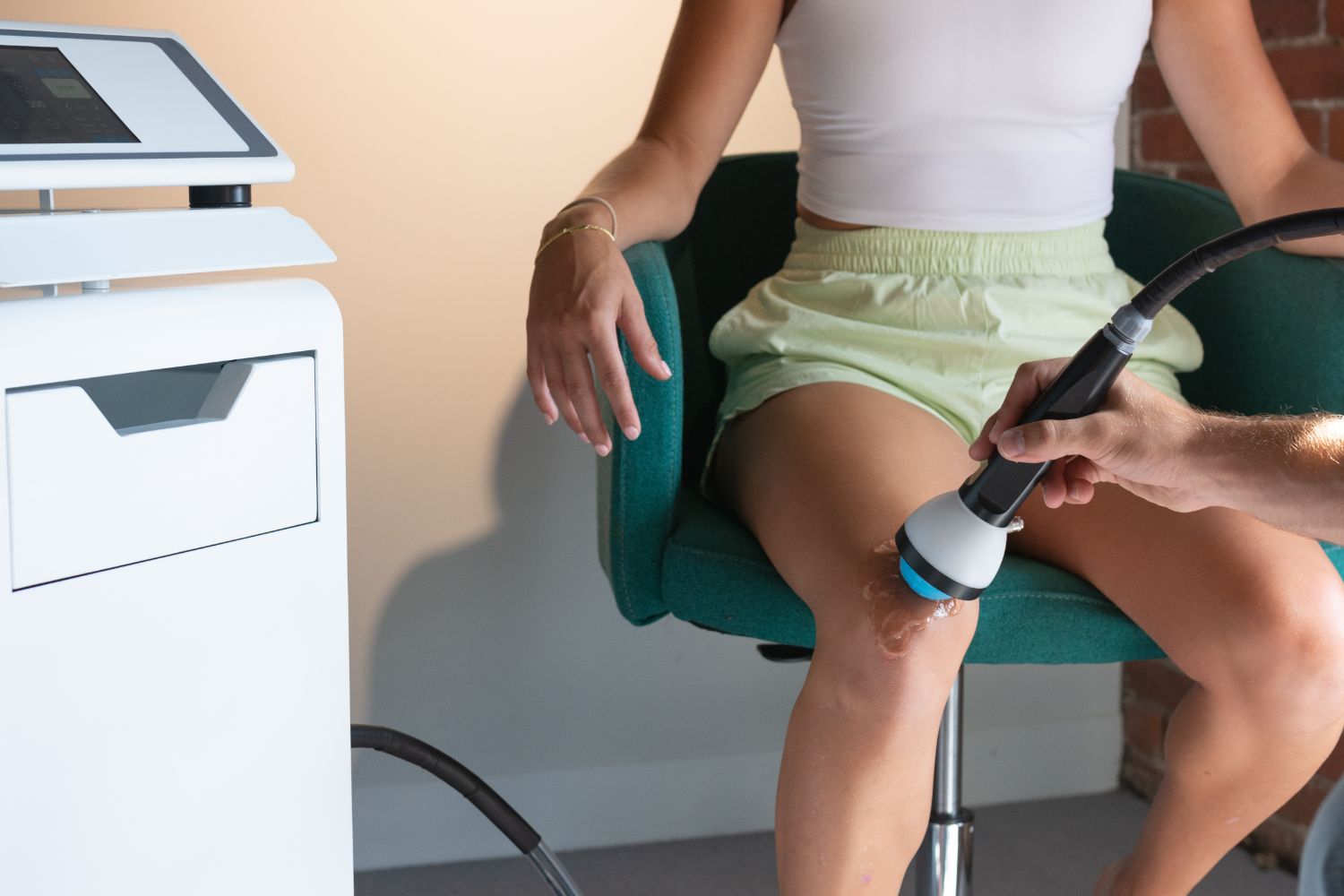
The area that hurts the most is not always the only area that deserves attention because pain can be influenced by nearby joints, muscles, tendons, nerves, and movement patterns. A careful evaluation looks at how the painful area functions within the larger musculoskeletal system before deciding whether targeted treatment such as shockwave therapy is appropriate.
For people in San Diego dealing with stubborn shoulder, hip, knee, back, or foot discomfort, this distinction can be important. It is natural to assume that the most painful spot must also be the exact source of the problem.
Why Does Pain Location Not Always Identify the Source?
Pain tells a person that something deserves attention, but it does not always identify which structure is responsible.
A painful area can reflect irritation within that exact location. It can also be influenced by nearby muscles, joints, tendons, or nerves.
For example, discomfort near the shoulder may relate to the shoulder itself, but neck movement and surrounding muscles can sometimes affect symptoms in that region. Pain around the hip may involve the joint, nearby soft tissues, the lower back, or a combination of areas.
What Does a Chiropractor Look at Beyond the Painful Spot?
A chiropractor may begin by asking where the pain is strongest, but the assessment usually does not stop there.
Other useful questions can include:
- When did the problem begin?
- Was there an injury?
- Does the pain stay in one area?
- Does it spread or travel?
- Which movements make it worse?
- Which activities bring it on?
- Does rest change it?
- Is there stiffness or weakness?
- Are numbness or tingling present?
- Has the person changed the way they move because of pain?
These details help establish whether the complaint seems highly localized or connected to a broader movement pattern.
The examination may then look at the painful area alongside neighboring regions that could reasonably affect it.
Why Do Nearby Joints Matter?
Musculoskeletal regions rarely work in isolation.
Consider the knee.
Walking, running, climbing stairs, and squatting involve coordinated movement through the foot, ankle, knee, hip, pelvis, and trunk. If one area moves differently because of pain or limitation, another area may experience altered demands.
This does not mean a painful knee is automatically caused by the hip or ankle.
It means those areas may be worth assessing when the symptoms and movement pattern suggest a connection.
Can the Body Compensate for Pain Without You Realizing It?
Yes.
People frequently adjust movement in response to discomfort without consciously deciding to do so.
Someone with knee pain may shorten a step.
A person with a painful foot may shift weight toward the other side.
Someone with hip discomfort may rotate the trunk differently when standing from a chair.
A patient with shoulder pain may avoid lifting an arm fully overhead and begin using the neck or upper back differently.
Why Does Movement Testing Matter?
Pain at rest provides one kind of information. Pain during movement provides another.
A clinician may ask someone to bend, rotate, walk, squat, reach, or move a joint through a comfortable range.
The goal is not to provoke pain unnecessarily.
Instead, the clinician is observing:
- Which movement brings on symptoms
- Whether the pain stays local
- Whether nearby joints move normally
- Whether the person compensates
- Whether range of motion is limited
- Whether the same symptom appears in more than one movement
These patterns can help determine whether the most painful spot behaves like a local problem or whether another region may also deserve attention.
How Does This Relate to Shockwave Therapy?
Shockwave therapy is typically directed toward a specific treatment area, which makes identifying the appropriate target important.
Herfindahl Chiropractic offers chiropractic shockwave therapy through StemWave Therapy for appropriate musculoskeletal complaints in San Diego.
Before targeted treatment is considered, the painful area still needs to be evaluated in context.
For example, someone may point to a small tender area near the knee. If the assessment suggests that the local tissue itself is the primary problem, targeted treatment may make sense.
Another person may have pain near the knee but also show significant movement limitations elsewhere, neurological symptoms, or findings that suggest the pain is not simply a localized soft-tissue complaint.
The same treatment should not automatically be used for both situations.
Does the Most Tender Spot Need the Most Treatment?
Not always.
Tenderness provides useful information, but tenderness alone does not identify the full cause of pain.
A sore area may become sensitive because the tissue itself is irritated. It may also be overloaded because a person has been moving differently.
For example, a muscle may become tender because it has been working harder to compensate for another painful region.
Why Is Symptom History So Important?
A pain complaint that started yesterday is different from one that has gradually developed over six months.
History helps establish the sequence.
A clinician may want to know:
- Which area hurt first?
- Did another region become painful later?
- Did symptoms follow an injury?
- Did the pain begin after an increase in activity?
- Has the person changed shoes, exercise routines, work habits, or sports?
- Has the pain gradually spread?
- Did treatment elsewhere change the symptom pattern?
The order matters because it can reveal whether the most painful area was actually the first area affected.
Someone may now complain mostly about the hip, for example, but recall that lower-back stiffness appeared several weeks earlier.
Another person may have a very localized tendon complaint with no related symptoms elsewhere.
Why Can Shoulder Pain Require Looking at the Upper Back?
The shoulder is a good example of how neighboring regions interact.
Overhead reaching depends not only on the shoulder joint but also on coordinated movement of the shoulder blade and upper thoracic region.
A person may therefore experience shoulder discomfort during lifting while also having restricted upper-back movement or altered scapular motion.
A clinician providing chiropractic care may consider these relationships when deciding whether local treatment, mobility work, another conservative approach, or additional evaluation makes sense.
Why Can Hip Pain Lead to a Broader Evaluation?
Hip pain can be even more difficult to localize.
Pain may be felt in the groin, outer hip, buttock, or upper thigh. Some lower-back problems can also produce discomfort near the posterior hip.
If a person simply says, “My hip hurts,” more detail is needed.
A clinician may look at:
- Hip rotation
- Lumbar movement
- Walking pattern
- Strength
- Tenderness
- Whether the pain travels
- Whether neurological symptoms are present
This broader assessment can help distinguish a relatively localized hip complaint from pain that may involve another region.
It can also help determine whether targeted treatment is appropriate.
Can Knee Pain Be Influenced by the Hip or Foot?
It can.
The knee sits between two highly active regions: the hip above and the foot and ankle below.
During walking, running, and squatting, movement through those areas affects how forces travel through the leg.
A painful knee may therefore prompt a clinician to look at the hip and ankle if the movement pattern suggests they are relevant.
That does not mean the treatment automatically shifts away from the knee.
What About Foot or Heel Pain?
Foot pain often feels highly localized, especially when one specific spot is tender.
Even so, clinicians may still observe how someone walks and how the ankle and lower leg move.
A painful foot can quickly change gait.
Someone may begin rolling weight toward the outside of the foot, taking shorter steps, or avoiding normal push-off.
Why Should Nerve Symptoms Change the Evaluation?
Numbness, tingling, burning, or weakness may suggest that the complaint involves more than local soft-tissue soreness.
For example, a person may report pain near the hip but also describe tingling down the leg.
Another person may have shoulder-area discomfort accompanied by numbness in the hand.
Those symptoms may shift attention toward nerve pathways or another source that requires further assessment.
Is Shockwave Therapy Used for Every Painful Area?
No.
Shockwave treatment is one tool used for selected musculoskeletal complaints.
It is not automatically appropriate for every type of pain, and the presence of tenderness alone is not enough to determine candidacy.
Before treatment, a clinician may need to consider:
- The likely tissue involved
- How long symptoms have been present
- Whether an injury occurred
- Whether neurological symptoms exist
- Whether the painful area is local or referred
- Which movements reproduce symptoms
- Whether another condition may require different evaluation
For people exploring chiropractic shockwave therapy, this step is important because targeted treatment makes the most sense when the target itself is reasonably well understood.
Why Can Treating Only the Painful Spot Sometimes Miss the Bigger Picture?
Focusing only on symptoms can sometimes overlook the movement pattern that contributed to them.
Imagine a recreational runner with tenderness around one knee.
If the evaluation only identifies the tender point, treatment may remain focused entirely there.
But suppose the runner also demonstrates restricted ankle movement and a noticeable change in gait that began after a previous foot injury.
Those findings may or may not be directly responsible for the knee complaint, but they provide important context.
Does This Mean Every Patient Needs a Full-Body Evaluation?
Not necessarily.
Evaluation should remain relevant to the complaint.
Someone with a clearly localized and uncomplicated problem does not automatically need every joint examined.
How Can Patients Help Describe the Problem More Clearly?
People can make an appointment more productive by paying attention to how their symptoms behave.
It may help to notice:
- The exact spot that hurts most
- Whether another area hurts too
- Which movement brings on the pain
- Whether symptoms spread
- Whether walking has changed
- Whether pain is worse after activity
- Whether stiffness appears elsewhere
- Whether numbness or tingling occurs
- Whether another injury happened before the pain began
Patients do not need to diagnose themselves.
They simply need to describe what they notice.
That information can help the clinician determine how broad or focused the evaluation should be.
When Should a Painful Area Receive Medical Evaluation Instead?
Some symptoms may require medical assessment rather than routine conservative treatment.
Prompt evaluation may be appropriate when pain follows significant trauma, when the person cannot bear weight, when severe weakness develops, or when symptoms are rapidly worsening.
Other neurological or systemic warning signs may also change what type of care is appropriate.
Responsible chiropractic care includes recognizing when a painful area does not fit the expected pattern of a straightforward musculoskeletal complaint.
The Painful Spot Is Important, but It Is Only Part of the Story
The location that hurts most deserves attention, but it should not always be treated as the entire explanation.
Muscles, joints, nerves, and movement patterns work together. Pain in one area may alter how another region functions, while referred symptoms can make the original source difficult to identify.
For people in San Diego considering a chiropractor for persistent musculoskeletal pain, a thoughtful evaluation can help determine whether the problem appears localized or whether nearby areas also deserve consideration.
About Herfindahl Chiropractic
Herfindahl Chiropractic serves San Diego patients with chiropractic care and other conservative musculoskeletal services tailored to individual needs. To learn more about their location and plan a visit, readers can find their office on Google Maps.