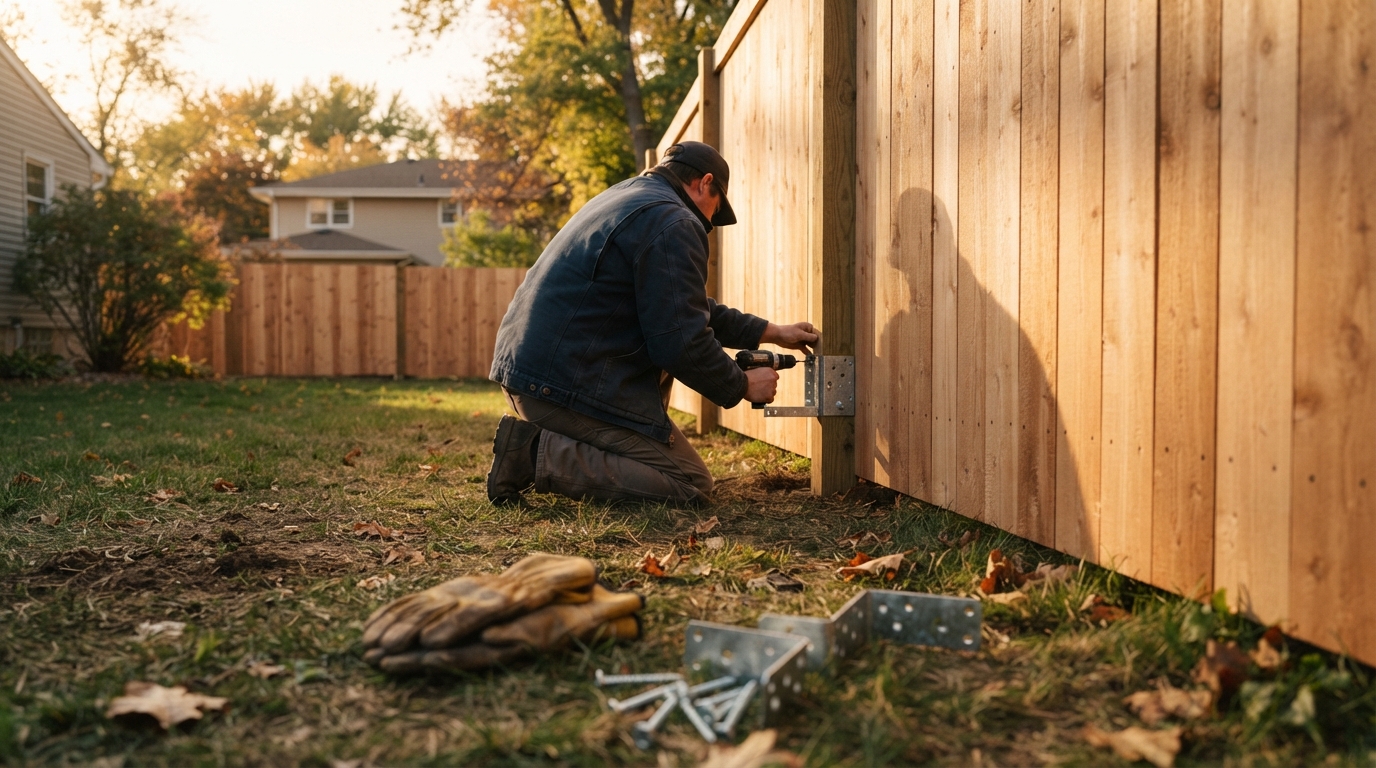
• Wood fences in Ankeny are typically built with treated or cedar lumber on wood or steel posts, offering a natural look with moderate upkeep.
• Fall and spring are the most practical installation windows in central Iowa due to soil and weather conditions.
• Regular sealing and post inspections extend lifespan and reduce warping or rot over time.
Homeowners searching for wood fence installation Ankeny IA usually want a straightforward answer: what materials hold up best, when should the work be scheduled, and how much maintenance will the fence actually require once it is in the ground.
Ankeny’s freeze-thaw cycles and clay-heavy soil make material choice and post depth just as important as the fence style itself. A properly planned Wood Fence Installation Ankeny IA project accounts for these conditions from the start, rather than treating them as an afterthought once boards start warping.
Wood Fence Materials Common in Ankeny Yards
Wood fencing in this region is generally built from treated lumber or cedar, each offering different tradeoffs in cost, appearance, and longevity.
• Treated wood resists moisture and insects, making it a durable option for privacy and boundary fences.
• Cedar offers a warmer natural tone and holds up well against rot without chemical treatment.
• Posts can be set in wood or steel, depending on soil conditions and the fence’s intended load.
According to supplier fencing information from Midwest Fence & Gate, wood fences are available in a variety of styles constructed with treated or cedar wood materials and can be built using wood or steel posts. That range of options allows a fence to be matched to both budget and the specific demands of a property’s terrain.
Timing an Installation Around Iowa’s Climate
Central Iowa’s seasonal swings affect when ground conditions are workable and when materials cure properly.
1. Late spring through early fall generally offers the driest, most stable soil for digging post holes.
2. Frozen or saturated ground in winter and early spring can delay excavation and compromise post stability.
3. Wood treated or sealed during moderate, dry weather adheres better and cures more evenly.
The USDA Forest Products Laboratory notes that wood exposed to fluctuating moisture and temperature is more prone to movement and decay, which is why timing installation around stable weather reduces long-term maintenance issues. Scheduling around these windows helps avoid callbacks for leaning posts or uneven gates later.
Maintenance That Keeps a Wood Fence Looking New
A wood fence is a long-term investment, and its appearance and structural integrity depend on consistent, if minimal, upkeep.
|
Maintenance Task |
Recommended Frequency |
Purpose |
|
Sealing or staining |
Every 2-3 years |
Protects against moisture and UV fading |
|
Post and hardware check |
Annually |
Catches leaning, loose gates, or rust early |
|
Debris and vegetation clearing |
Seasonally |
Prevents trapped moisture against boards |
|
Panel inspection for rot |
Twice yearly |
Identifies boards needing early replacement |
Skipping these steps does not cause immediate failure, but it accelerates wear, particularly on ground-contact boards and posts exposed to Ankeny’s freeze-thaw cycles.
Choosing Style and Height for Residential Properties
Style and height decisions affect both function and how well a fence fits neighborhood expectations.
• Privacy fences typically use solid boards for maximum screening between yards.
• Picket-style fences offer a lower, more decorative boundary without blocking sightlines.
• Post and rail designs suit larger lots where open visibility matters more than privacy.
Homeowners planning a project should also confirm local permit and setback requirements before materials are ordered, since these vary by lot and jurisdiction. Matching style to lot size and intended use prevents costly adjustments after installation begins.
Frequently Asked Questions
How long does a wood fence typically last in Iowa’s climate? Lifespan depends heavily on wood type, sealing frequency, and soil drainage, with treated lumber and cedar both capable of lasting many years when maintained on a regular sealing schedule.
Is cedar or treated wood better for privacy fencing? Cedar offers natural rot resistance and a warmer appearance, while treated wood is often more budget-friendly; both are commonly used in residential installations in this region.
Can wood fences be installed on sloped yards? Yes, though sloped or uneven ground requires additional planning for post depth and panel adjustment to keep the fence secure and level.
What is the first step in planning an installation? Confirming property lines, local permit rules, and material preferences before requesting a project timeline helps avoid delays once work begins.
Wood fencing remains one of the most practical ways to add privacy and defined boundaries to an Ankeny property, provided material choice, timing, and maintenance are planned together rather than treated separately. For homeowners ready to move forward, Midwest Fence & Gate Company provides residential fencing services in the Ankeny area, including wood fence options built with treated or cedar materials suited to local conditions.