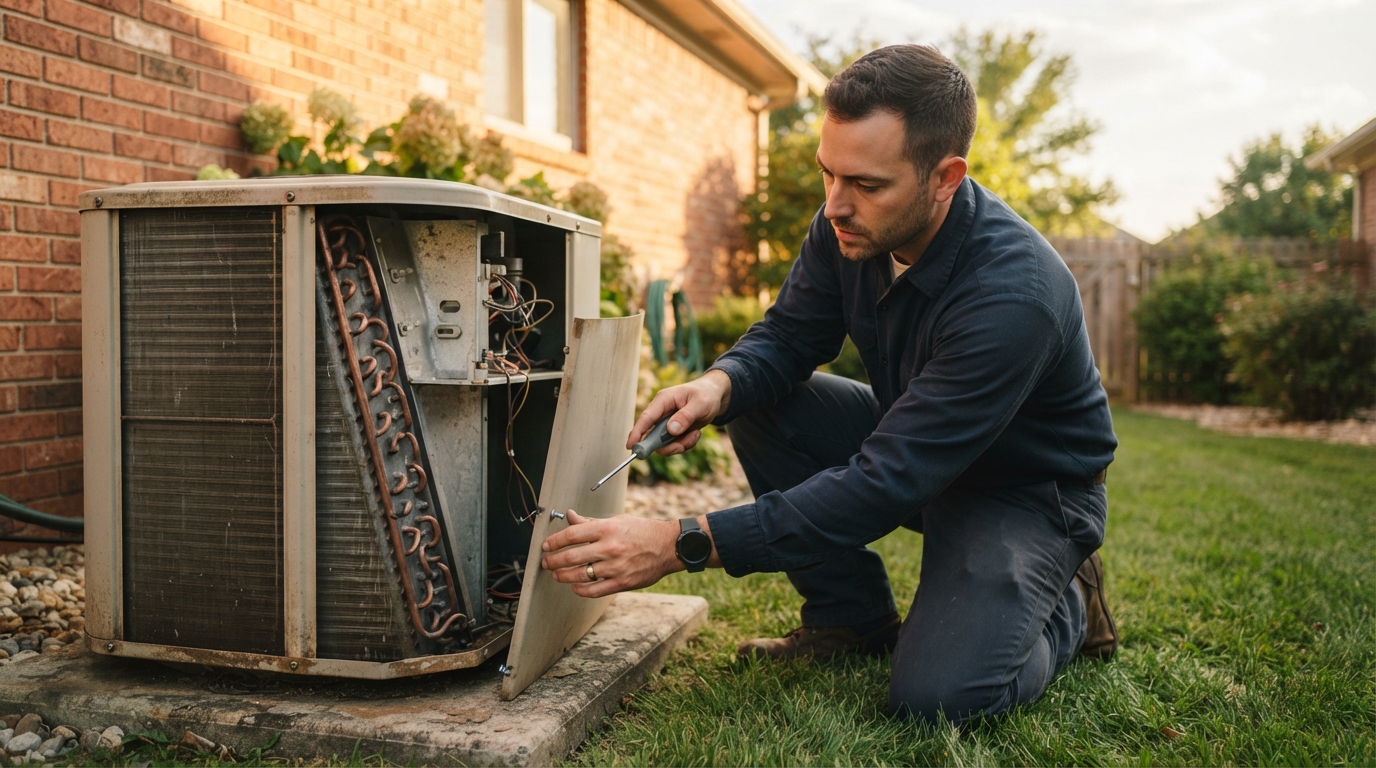
• Routine filter changes, coil cleaning, and professional tune-ups keep cooling systems efficient and extend equipment lifespan.
• A clogged filter alone can raise energy use measurably, making basic upkeep one of the most affordable efficiency steps available.
• Homeowners in Boiling Springs, SC face long, humid summers that make seasonal AC checks especially important for comfort and cost control.
Air conditioning maintenance refers to the routine inspection, cleaning, and adjustment tasks that keep a cooling system running efficiently and reliably throughout the year. Regular upkeep prevents breakdowns during peak heat, reduces energy waste, and extends the working life of indoor and outdoor components.
Scheduling Air Conditioning Maintenance before summer temperatures peak gives technicians time to catch small issues, such as a weak refrigerant charge or a dirty coil, before they turn into costly repairs. Homeowners who wait until a system fails often face higher repair bills and longer wait times for service.
Why Routine AC Upkeep Matters for South Carolina Homes
Upstate South Carolina summers bring extended stretches of heat and humidity, which puts added strain on residential cooling equipment. Systems that run nearly nonstop for months need clean components and properly calibrated settings to avoid overworking the compressor.
Neglected systems waste money in ways that are easy to overlook. A clogged filter alone can raise an air conditioner’s energy consumption by 5% to 15%, which makes basic upkeep one of the cheapest efficiency measures available to a household. Coils follow a similar pattern of gradual performance loss when dirt and debris accumulate on their surfaces.
Duct problems compound the issue. ENERGY STAR’s maintenance checklist covers checking refrigerant charge, sealing and inspecting ducts, verifying thermostat operation, and clearing condensate drains, and duct leakage is an item homeowners are least likely to notice because the energy is lost before the cooled air reaches a room.
Homeowner Maintenance Checklist
The tasks below separate what a homeowner can safely handle from what should be left to a licensed technician.
Tasks homeowners can do:
• Check and replace air filters on a regular schedule, since inspecting, cleaning, or changing air filters once a month is recommended, because a dirty filter can increase energy costs and damage equipment, leading to early failure.
• Clear leaves, grass clippings, and debris away from the outdoor condenser unit.
• Confirm the thermostat is set correctly and responding to adjustments.
• Visually inspect the condensate drain line for blockages or standing water.
Tasks best left to a licensed professional:
• Checking refrigerant charge and sealing any leaks, since locating and repairing a leak instead of topping it off keeps the system operating at its best while reducing refrigerant emissions and energy use, and also helps avoid additional repairs later.
• Cleaning evaporator and condenser coils thoroughly.
• Tightening electrical connections and testing motor voltage.
• Running a full efficiency diagnostic on an aging system.
For additional background on system upkeep, the EPA’s homeowner guidance on refrigerant and equipment servicing outlines when professional evaluation is warranted, particularly for older units.
DIY vs. Professional Maintenance
|
Task |
Who Handles It |
Typical Frequency |
|
Filter replacement |
Homeowner |
Monthly |
|
Outdoor unit debris clearing |
Homeowner |
Monthly during cooling season |
|
Refrigerant check and leak repair |
Licensed technician |
Annually or as needed |
|
Coil cleaning and electrical inspection |
Licensed technician |
Annually |
This split keeps simple, low-risk tasks in the homeowner’s hands while reserving equipment-specific or safety-related work for trained professionals.
When to Schedule a Professional Visit
Most manufacturers and energy agencies recommend at least one full inspection per year, ideally before the cooling season begins. Systems older than ten years deserve closer attention, since EPA recommends that equipment more than 10 years old or not keeping a house comfortable be evaluated by a professional HVAC contractor, and if it is not performing efficiently, replacing it with an ENERGY STAR labeled system can save energy and money.
Based in Spartanburg, SC, Read More About Air Conditioning Maintenance extends its residential cooling support to households throughout Boiling Springs, SC, where seasonal humidity makes consistent upkeep especially relevant.
Frequently Asked Questions
How often should a central air conditioner be serviced? Most homeowners benefit from one professional inspection per year, typically scheduled in spring before temperatures rise, with filter checks handled monthly during active cooling months.
Can a dirty filter really affect energy bills? Yes. A clogged filter forces the system to work harder, and replacing it with a clean one can measurably lower energy consumption, as noted in the checklist above.
Is refrigerant checking something a homeowner can do alone? No. Refrigerant handling requires specialized equipment and training, and leaks should be located and repaired by a certified technician rather than simply topped off.
What is the biggest warning sign that a system needs attention? Rising energy bills without a change in usage habits, combined with uneven cooling or unusual noises, typically signal that a system needs professional inspection.
Final Thoughts
Consistent attention to filters, coils, and refrigerant levels protects both comfort and household energy costs throughout the cooling season. Current service area details for Read More About Air Conditioning Maintenance are published for homeowners weighing seasonal upkeep options.