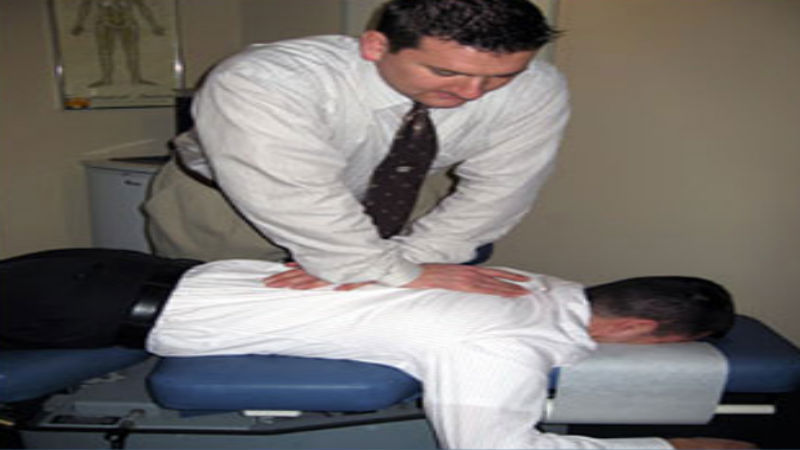
More pulling force does not automatically make spinal decompression more effective. The amount of traction used should be considered alongside the patient’s symptoms, tolerance, positioning, treatment goals, and clinical response rather than increased simply because a stronger pull seems more powerful.
For people in Placentia, CA exploring Spinal Decompression for lower-back or nerve-related symptoms, understanding this distinction can help set more realistic expectations. Mechanical traction involves multiple treatment variables, and force is only one of them.
Why Isn’t More Force Automatically Better?
It can be tempting to think of traction in simple terms: if some pulling force is useful, then more must produce a greater effect.
Research does not support that conclusion.
A 2023 systematic review evaluated 16 randomized studies comparing different types and parameters of lumbar traction for people with low-back pain, with or without lumbar radiculopathy. Five studies were included in the meta-analysis, and researchers found no significant short-term difference between different traction approaches. Both higher- and lower-force approaches showed improvements in pain in the included evidence, although the overall certainty was low to very low.
This does not mean that traction force is irrelevant. It means that force alone cannot be used as a reliable measure of whether treatment is appropriate or likely to be helpful.
What Determines the Amount of Force Used?
Lumbar decompression should be considered in the context of the individual receiving care.
Several factors can influence how traction is approached.
Symptom Location
Lower-back discomfort that remains localized is different from pain, numbness, tingling, or other symptoms extending into the buttock or leg.
If symptoms change location or intensity, that information may affect how treatment is approached.
People do not experience traction in exactly the same way. One person may be comfortable with a particular setting while another may find the same level difficult to tolerate.
Treatment should not become a contest to see how much pulling force a patient can withstand.
Body Position
Positioning can influence how mechanical traction is applied to the lumbar spine. Hip position, pelvic support, and the direction of pull can all affect how a session feels.
For that reason, two sessions using similar force levels may not feel identical.
Clinical Response
The response during and after care also matters. Changes in pain, movement, activity tolerance, and nerve-related symptoms can provide more useful information than simply looking at the traction number.
What Does Research Say About High-Force vs. Low-Force Traction?
Research comparing traction dosages provides another reason to avoid assuming that higher force always produces better results.
One small randomized trial studied 17 people with acute lumbar sciatica related to disc herniation. Participants received either traction at 50% of body weight or traction at 10% of body weight. Both groups improved on several measures, but researchers did not find a significant group-by-time interaction demonstrating that the higher-force approach was clearly superior overall.
Another systematic review examining traction studies found substantial variability in force, treatment rhythm, session duration, frequency, and patient characteristics across 37 randomized controlled trials. That variability highlights why traction cannot easily be reduced to a single “ideal” force level that applies to everyone.
Is Spinal Decompression the Same as Simply Pulling Harder?
No.
Chiropractic Spinal Decompression involves more than applying increasing force to the lower back.
Treatment may involve controlled mechanical traction delivered with specific positioning and treatment parameters. The goal is not simply to create the strongest stretching sensation possible.
Patients researching Spinal Decompression Therapy should therefore focus on whether treatment is appropriately evaluated and adjusted rather than assuming the strongest setting is automatically the best one.
That distinction is especially important for anyone comparing treatment experiences or trying to determine whether a session “worked” based solely on how intense it felt.
Should Spinal Decompression Feel Strong?
A patient may feel a controlled pulling or stretching sensation during mechanical traction, but a stronger sensation is not proof of greater effectiveness.
Comfort and response matter.
If a patient experiences a meaningful increase in pain, new numbness or tingling, unexpected weakness, or another significant change during treatment, those symptoms should be communicated rather than ignored in pursuit of a stronger session.
The appropriate response may involve reassessing the setup instead of automatically increasing or continuing the same amount of traction.
Can the Force Change Between Sessions?
Yes.
The same person may not require identical settings at every appointment.
Symptoms can fluctuate with activity, prolonged sitting, lifting, exercise, travel, or other factors. A patient may arrive at one session with primarily lower-back discomfort and return later with more noticeable symptoms in the leg.
Those changes provide information that may influence treatment decisions.
This is one reason lumbar decompression should not follow a simple progression in which force automatically increases from session to session.
Sometimes maintaining a setting may be reasonable. In other situations, positioning or another parameter may need reconsideration. A change in symptoms may also require broader reassessment rather than simply changing the traction force.
Why Does Individual Assessment Matter?
Low-back pain is not a single condition with one universal treatment formula.
People may have different symptom patterns, medical histories, activity limitations, and responses to movement. Even when two people report similar pain locations, the underlying clinical picture may differ.
Research also reflects this complexity. A meta-analysis involving seven studies and 403 participants with imaging-confirmed herniated discs found evidence of short-term improvements in pain and function with lumbar traction compared with sham or no traction, but it did not find evidence supporting long-term effects or reduction in herniated-disc size.
That type of evidence supports a measured approach: treatment decisions should be based on the individual situation rather than broad assumptions about what traction can accomplish.
What Should Patients Ask About Spinal Decompression?
Patients considering decompression can benefit from asking practical questions such as:
- How are the treatment settings selected?
- Will symptoms be reassessed during the course of care?
- What changes should be reported between sessions?
- How is patient tolerance considered?
- What happens if symptoms change or worsen?
- Is the goal to increase force, or to adjust treatment based on response?
These questions are more useful than simply asking how much pulling force will be used.
The Main Takeaway About Traction Force
More force does not automatically mean better spinal decompression.
Current research shows that different traction dosages and approaches can produce similar short-term outcomes in some patient groups, while the evidence overall remains mixed and dependent on the condition being studied.
For people considering Spinal Decompression in Placentia, CA, the more important issue is whether treatment is evaluated and adjusted according to symptoms, tolerance, positioning, and response.
Anyone experiencing persistent lower-back or nerve-related symptoms should discuss their presentation with a qualified healthcare provider to determine whether decompression or another conservative approach may be appropriate.